
Guida
Come catalogare una collezione
Il metodo che vale per tutte
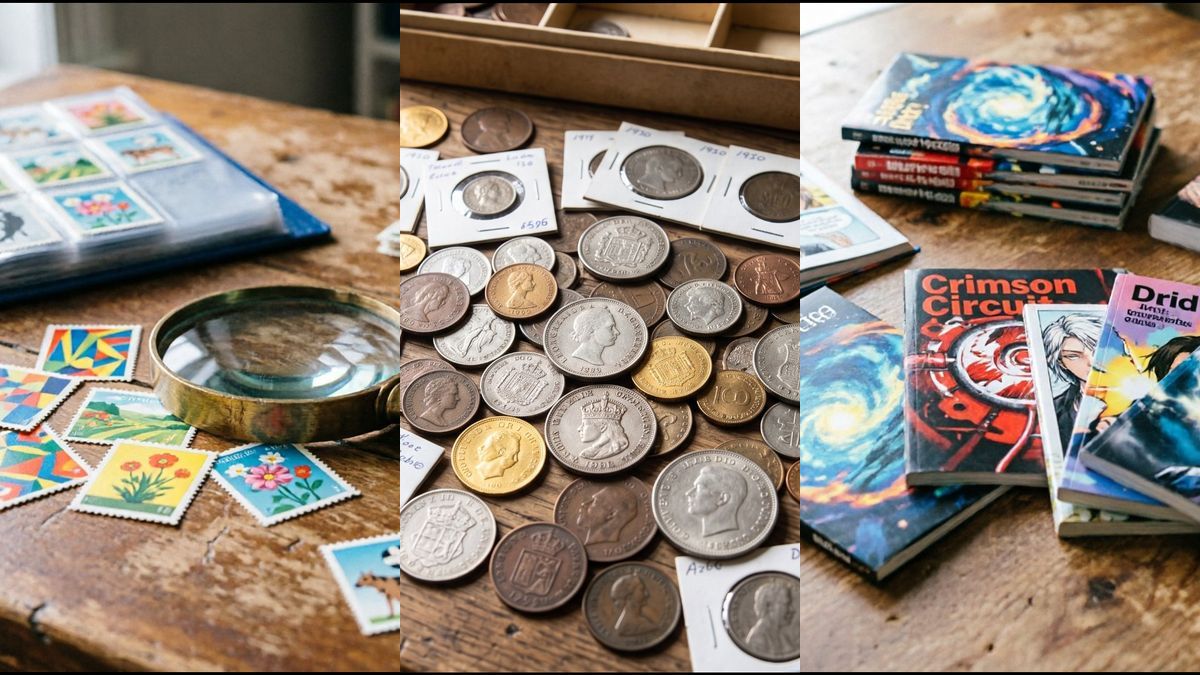
Che siano francobolli, monete, fumetti, dischi o modellini, il problema è sempre lo stesso: cosa hai, quanto vale e dove l'hai messo. E il metodo per rispondere è sempre lo stesso, qualunque cosa tu collezioni.
Qui c'è il metodo. Poi, per i dettagli che cambiano da collezione a collezione — quali campi servono, quali trappole ci sono — ci sono le guide specifiche, in fondo alla pagina.
1. Le due cose che contano davvero
Prima dei campi, prima del programma, prima di tutto: ogni pezzo ha bisogno di un codice e di un posto.
- Il codice è tuo: lo decidi tu e non cambia mai più. Non è il numero di catalogo, non è l'anno, non è il nome: è la tua etichetta, quella che scrivi anche sull'involucro.
- Il posto è dove sta fisicamente: scatola, raccoglitore, pagina, ripiano.
Con questi due, un pezzo lo ritrovi in dieci secondi anche fra dieci anni. Tutto il resto è un di più.
⚠️ E nel codice non mettere il nome, l'anno o la categoria. Sembra comodo perché dice tutto a colpo d'occhio, ma appena correggi un'attribuzione — e prima o poi succede a tutti — il codice diventa falso e devi rifarlo su schede, etichette e foto. Il codice è un numero, non una descrizione.
2. Cosa registrare
Non serve registrare tutto. Una dozzina di campi scelti bene batte cinquanta campi vaghi, perché i campi che poi non aggiorni non servono a niente.
Questi servono sempre, qualunque cosa tu collezioni:
- Il codice (vedi sopra)
- Nome e una categoria per raggruppare
- Anno o data
- Condizione o stato
- Dove l'hai messo
- Quanto l'hai pagato e quando
- Quanto vale — e segna quando l'hai stimato: i valori cambiano, e un numero senza data non dice niente
- Una foto
- Note — quelle che ti serviranno fra due anni e che adesso credi di ricordare
Poi ognuno ha i suoi: il numero di catalogo per i francobolli, il peso e il diametro per le monete, la variante per i fumetti. Li trovi nelle guide specifiche.
3. La trappola: il sistema perfetto che abbandoni
Quasi tutti cominciano così: si sceglie un sistema preciso, con tanti campi, tutto ben pensato. Per due settimane funziona benissimo. Poi arriva una settimana piena, salti qualche inserimento, e il catalogo comincia a non corrispondere più alla realtà. A quel punto aggiornarlo diventa un lavoro noioso, e lo si lascia lì.
Il catalogo abbandonato è peggio di nessun catalogo: ti fidi di un elenco che è falso.
Quindi la regola vera non è «fai un bel catalogo», è: scegli il sistema più semplice che riesci a mantenere. Se hai dubbi fra due strade, prendi quella più leggera. Puoi sempre aggiungere un campo dopo — ma non puoi recuperare tre anni di inserimenti mancati.
4. Le tre regole che tengono in piedi tutto
Queste contano più dei campi.
- Un pezzo entra a posto solo se entra anche nell'elenco, lo stesso giorno. È la regola che salva tutto. Se rimandi, dopo due mesi hai le scatole piene e un elenco che non corrisponde più.
- Non registrare tutto subito. Quando arriva un lotto grosso, non fermarti a catalogarlo per intero: apri un «da sistemare», buttaci dentro quello che c'è con due note, e lavoralo a pezzi. Meglio un elenco approssimativo oggi che un elenco perfetto mai.
- Un giro di controllo ogni tanto. Prendi una parte della collezione, confrontala con l'elenco, sistema quello che non torna. Un'ora ogni tanto, e non arrivi mai al disastro.
5. A cosa serve tutto questo
Non è ordine fine a se stesso. Serve a tre cose concrete, e valgono per qualunque collezione:
- Non comprare due volte lo stesso pezzo. Succede a tutti, ed è la cosa che fa più arrabbiare.
- Sapere cosa hai e quanto vale. Per curiosità, ma anche per l'assicurazione: se succede qualcosa, senza elenco non ti rimborsano.
- Essere pronto se un giorno vendi. Un elenco ordinato vale soldi: chi compra paga di più se sa cosa sta comprando.
6. Le guide, collezione per collezione
Qui sopra c'è il metodo, che è uguale per tutti. Qui sotto ci sono i dettagli che cambiano — quali campi servono davvero, e le trappole che si incontrano solo in quella collezione:
- Come catalogare una collezione di francobolli — il numero di catalogo, la condizione, i doppioni
- Come catalogare una collezione di monete — misure e bordo, e come gestire le attribuzioni incerte
- Come catalogare una collezione di fumetti — serie e volume, le varianti, e come si identifica un albo
7. Chi scrive
Non sono un collezionista — quindi da me non aspettarti quali sono i pezzi rari o quanto valgono: non è il mio mestiere, e non voglio inventarmelo. Faccio il magazziniere: di mestiere tengo in ordine le cose, le conto, le cerco e le ritrovo. Questo metodo viene da lì.
Se preferisci farlo con un programma invece che con un foglio di calcolo, ne ho fatto uno: si chiama Thesaura, è per Windows, e serve proprio a questo. Si può provare gratis fino a 15 oggetti.
Guide
How to catalogue a collection
The method that works for all of them
Whether it is stamps, coins, comics, records or models, the problem is always the same: what you have, what it is worth, and where you put it. And the method for answering is always the same, whatever you collect.
Here is the method. Then, for the details that change from one collection to another — which fields you need, which traps to watch for — there are the specific guides, at the bottom of the page.
1. The two things that really matter
Before the fields, before the software, before anything else: every piece needs a code and a place.
- The code is yours: you decide it and it never changes. It is not the catalogue number, not the year, not the name: it is your own label, the one you also write on the sleeve.
- The place is where it physically is: box, album, page, shelf.
With those two, you can find a piece in ten seconds, even ten years from now. Everything else is a bonus.
⚠️ And do not put the name, the year or the category in the code. It looks convenient because it tells you everything at a glance, but the moment you correct an attribution — and sooner or later everyone does — the code becomes false and you have to redo it on records, labels and photos. The code is a number, not a description.
2. What to record
You do not need to record everything. A dozen well-chosen fields beat fifty vague ones, because fields you never update are worth nothing.
These always matter, whatever you collect:
- The code (see above)
- Name and a category to group by
- Year or date
- Condition or state
- Where you put it
- What you paid and when
- What it is worth — and note when you estimated it: values change, and a number without a date tells you nothing
- A photo
- Notes — the ones you will need in two years and think you will remember
Then each collection has its own: the catalogue number for stamps, weight and diameter for coins, the variant for comics. You will find them in the specific guides.
3. The trap: the perfect system you abandon
Almost everyone starts the same way: a precise system, with plenty of fields, all carefully thought out. For two weeks it works beautifully. Then a busy week comes, you skip a few entries, and the catalogue stops matching reality. At that point keeping it up becomes a chore, and you leave it there.
An abandoned catalogue is worse than no catalogue: you trust a list that is false.
So the real rule is not «build a good catalogue», it is: pick the simplest system you can keep up. If you are torn between two options, take the lighter one. You can always add a field later — but you cannot recover three years of missed entries.
4. The three rules that hold it all together
These matter more than the fields.
- A piece goes into its place only if it also goes into the list, that same day. This is the rule that saves everything. Put it off and, two months later, the boxes are full and the list no longer matches.
- Do not record everything at once. When a large lot arrives, do not stop to catalogue all of it: open an «unsorted» pile, throw in what you have with two quick notes, and work through it in stages. A rough list today beats a perfect list that never happens.
- Check the catalogue now and then. Take part of the collection, compare it with the list, fix what does not match. An hour every so often, and you never end up with a mess.
5. What it is actually for
It is not tidiness for its own sake. It is for three concrete things, and they hold for any collection:
- Not buying the same piece twice. It happens to everyone, and it is the thing that annoys you most.
- Knowing what you have and what it is worth. Out of curiosity, but also for insurance: if something happens, without a list you get nothing.
- Being ready if you ever sell. An organised list is worth real money: a buyer pays more when they know what they are buying.
6. The guides, collection by collection
Above is the method, which is the same for everything. Below are the details that change — which fields really matter, and the traps you only meet in that particular collection:
- How to catalogue a stamp collection — the catalogue number, condition, duplicates
- How to catalogue a coin collection — measurements and edge, and how to handle uncertain attributions
- How to catalogue a comic collection — series and volume, variants, and how to identify an issue
7. Who is writing
I am not a collector — so do not ask me which pieces are rare or what they are worth: that is not my trade, and I am not going to make it up. I work in a warehouse: my job is keeping things in order, counting them, looking for them and finding them. This method comes from there.
If you would rather do this with a program than with a spreadsheet, I made one: it is called Thesaura, it is for Windows, and this is exactly what it is for. You can try it free with up to 15 items.