
Guida
Come catalogare una collezione di francobolli
Il metodo, in cinque passi
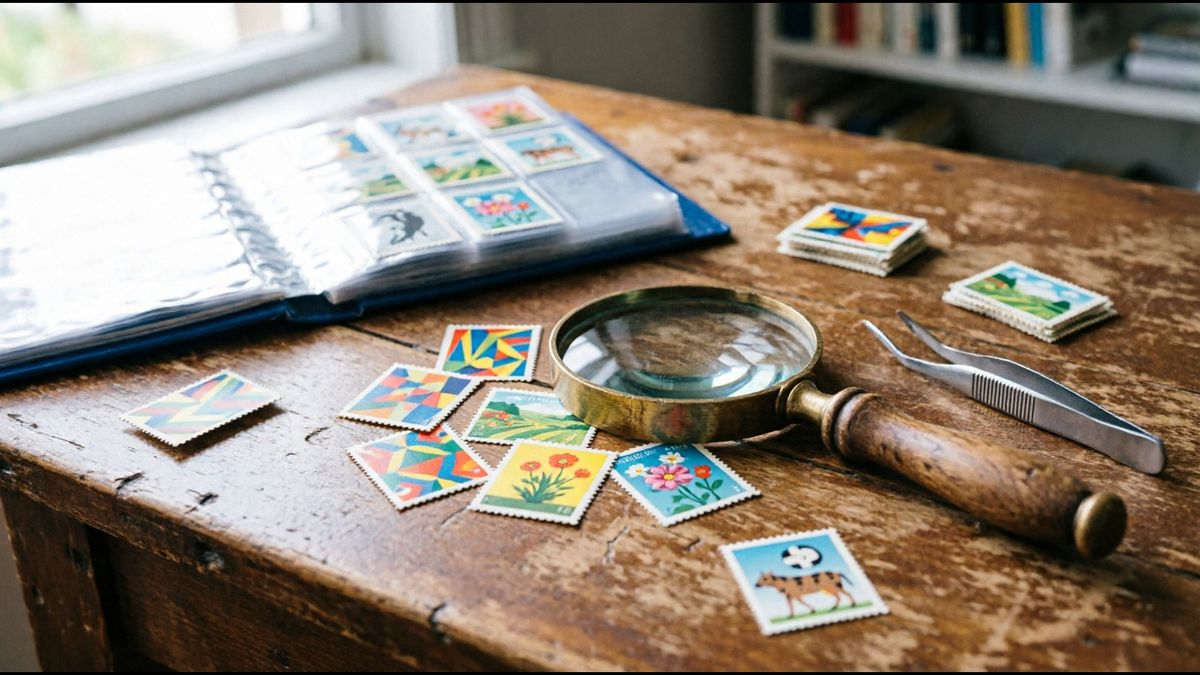
Hai una scatola di francobolli e non sai da dove cominciare. Oppure hai un album pieno e non riesci più a trovare niente. Il metodo è lo stesso nei due casi, e non serve essere esperti: serve decidere poche cose e poi tenerle.
1. Le due cose che contano davvero
Prima dei campi, prima del programma, prima di tutto: ogni francobollo ha bisogno di un numero e di un posto.
- Il numero è tuo: lo decidi tu e non cambia mai più. Non è il numero di catalogo — è la tua etichetta, quella che scrivi anche sul retro della bustina.
- Il posto è dove sta fisicamente: album, pagina, riga.
Con questi due, un francobollo lo ritrovi in dieci secondi anche fra dieci anni. Tutto il resto è un di più.
2. Cosa registrare per ogni francobollo
Non serve registrare tutto. Una dozzina di campi scelti bene batte cinquanta campi vaghi, perché i campi che poi non aggiorni non servono a niente.
Quelli che servono sempre:
- Il tuo numero (vedi sopra)
- Paese e anno di emissione
- Valore facciale
- Numero di catalogo — in Italia si usano il Sassone e l'Unificato; all'estero Michel, Scott o Stanley Gibbons. Il numero di catalogo toglie ogni dubbio: «Italia 1923, 30 centesimi» può essere tre francobolli diversi, un numero di catalogo no.
- Condizione: nuovo o usato. Se è nuovo, se ha ancora la gomma intatta o è stato incollato; se è usato, com'è l'annullo.
- Difetti: pieghe, strappi, parti mancanti. Vanno scritti subito, perché dopo non te li ricordi più.
- Dove l'hai messo (album, pagina, riga)
- Quanto l'hai pagato e quando
- Quanto vale — e segna l'anno del catalogo da cui l'hai preso: i valori cambiano, e fra cinque anni un numero senza anno non dice niente.
Se ti va, e solo se ti va: colore, soggetto, filigrana, dentellatura. Servono nei pezzi di valore, sono superflui nel resto. Aggiungili quando ti servono, non il primo giorno.
3. Un francobollo, una riga (anche i doppioni)
La tentazione è scrivere «ne ho 12» e fare una riga sola. Non farlo: due esemplari dello stesso francobollo non sono mai uguali — cambiano la condizione, l'annullo, i difetti. Se li metti insieme, quando ne vendi uno non sai più cosa ti resta.
Quindi: una riga per esemplare, anche se sono dozzine. E per i doppioni usa un'etichetta, tipo «doppioni» o «da scambiare»: così li ritrovi tutti insieme quando serve.
4. Le tre regole che tengono in piedi tutto
Queste contano più dei campi.
- Un francobollo entra nell'album solo se entra anche nell'elenco, lo stesso giorno. È la regola che salva tutto. Se rimandi, dopo due mesi hai un album pieno e un elenco che non corrisponde più — e a quel punto smetti di aggiornarlo.
- Non registrare tutto subito. Quando arriva un lotto grosso, non fermarti a catalogarlo per intero: apri un «da sistemare», buttaci dentro quello che c'è con due note, e lavoralo a pezzi. Meglio un elenco approssimativo oggi che un elenco perfetto mai.
- Un giro di controllo al mese, un album per volta. Prendi un album, confrontalo con l'elenco, sistema quello che non torna. Un'ora al mese, e non arrivi mai al disastro.
5. A cosa serve tutto questo
Non è ordine fine a se stesso. Serve a tre cose concrete:
- Non comprare due volte lo stesso francobollo. Succede a tutti, ed è la cosa che fa più arrabbiare.
- Sapere cosa hai e quanto vale. Per curiosità, ma anche per l'assicurazione: se succede qualcosa, senza elenco non ti rimborsano.
- Essere pronto se un giorno vendi. Un elenco ordinato vale soldi: chi compra una collezione paga di più se sa cosa sta comprando.
6. Chi scrive
Non sono un collezionista di francobolli — quindi da me non aspettarti quali sono i pezzi rari, non è il mio mestiere. Faccio il magazziniere: di mestiere tengo in ordine le cose, le conto, le cerco e le ritrovo. Questo metodo viene da lì, e vale per i francobolli come per tutto il resto.
Se preferisci farlo con un programma invece che con un foglio di calcolo, ne ho fatto uno: si chiama Thesaura, è per Windows, e serve proprio a questo. Si può provare gratis fino a 15 oggetti.
Le altre guide
Guide
How to catalogue a stamp collection
The method, in five steps
You have a box of stamps and no idea where to start. Or an album that is full and where you can no longer find anything. The method is the same in both cases, and you do not need to be an expert: you need to decide a few things, and then keep to them.
1. The two things that really matter
Before the fields, before the software, before anything else: every stamp needs a number and a place.
- The number is yours: you decide it and it never changes. It is not the catalogue number — it is your own label, the one you also write on the back of the glassine.
- The place is where the stamp physically is: album, page, row.
With those two, you can find a stamp in ten seconds, even ten years from now. Everything else is a bonus.
2. What to record for each stamp
You do not need to record everything. A dozen well-chosen fields beat fifty vague ones, because fields you never update are worth nothing.
The ones that always matter:
- Your number (see above)
- Country and year of issue
- Face value
- Catalogue number — Scott, Michel or Stanley Gibbons; in Italy the Sassone and Unificato. The catalogue number removes all doubt: «Italy 1923, 30 centesimi» could be three different stamps, a catalogue number cannot.
- Condition: mint or used. If mint, whether the gum is intact or it has been hinged; if used, how the postmark looks.
- Faults: creases, tears, missing pieces. Write them down straight away, because later you will not remember.
- Where you put it (album, page, row)
- What you paid and when
- What it is worth — and note the catalogue year you took the figure from: values change, and in five years a number without a year tells you nothing.
If you want to, and only if you want to: colour, subject, watermark, perforation. They matter for valuable stamps and are overkill for the rest. Add them when you need them, not on day one.
3. One stamp, one row (duplicates included)
The temptation is to write «I have 12» and make a single row. Don't: two copies of the same stamp are never identical — condition, postmark and faults differ. Put them together and, the day you sell one, you no longer know what you have left.
So: one row per copy, even when there are dozens. And for duplicates use a tag, something like «duplicates» or «for trade», so you can find them all together when you need them.
4. The three rules that hold it all together
These matter more than the fields.
- A stamp goes into the album only if it also goes into the list, that same day. This is the rule that saves everything. Put it off and, two months later, you have a full album and a list that no longer matches — and at that point you stop updating it.
- Do not record everything at once. When a large lot arrives, do not stop to catalogue all of it: open an «unsorted» pile, throw in what you have with two quick notes, and work through it in stages. A rough list today beats a perfect list that never happens.
- One check a month, one album at a time. Take an album, compare it with the list, fix what does not match. An hour a month, and you never end up with a mess.
5. What it is actually for
It is not tidiness for its own sake. It is for three concrete things:
- Not buying the same stamp twice. It happens to everyone, and it is the thing that annoys you most.
- Knowing what you have and what it is worth. Out of curiosity, but also for insurance: if something happens, without a list you get nothing.
- Being ready if you ever sell. An organised list is worth real money: a buyer pays more when they know what they are buying.
6. Who is writing
I am not a stamp collector — so do not ask me which pieces are rare, that is not my trade. I work in a warehouse: my job is keeping things in order, counting them, looking for them and finding them. This method comes from there, and it works for stamps as it does for anything else.
If you would rather do this with a program than with a spreadsheet, I made one: it is called Thesaura, it is for Windows, and this is exactly what it is for. You can try it free with up to 15 items.